
 | marketing@wsdks.com |  | +8617712621386 |  | No. 8 Jinwei Road, Changshu City, Jiangsu Province, P.R.China |


Zero Liquid Discharge and MBBR in Industrial Wastewater
MBBR and ZLD describe different levels of a treatment system. The search phrase zero liquid discharge zld vs mbbr industrial wastewater compares a whole system discharge objective with a biological unit process. MBBR may serve an upstream duty in some treatment trains. It does not remove dissolved salts or create a ZLD boundary by itself.
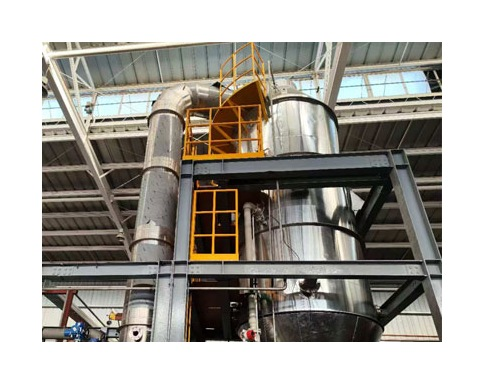
VIFLUTER's zero liquid discharge solutions page provides commercial context for the ZLD objective. This article explains the comparison and does not rank one method as universally better.
Zero Liquid Discharge ZLD Versus MBBR Industrial Wastewater
The comparison becomes clear when each term is placed at the correct level. ZLD defines a boundary and an intended liquid outlet condition for a treatment system. MBBR describes a reactor that supports attached biological growth on moving carrier media. A plant can use MBBR without ZLD, and a ZLD system can be designed without MBBR.
What MBBR Is Designed to Do
A Moving Bed Biofilm Reactor retains microorganisms as biofilm on carrier elements within a mixed reactor. Aeration or mixing keeps the carriers moving and supports contact between wastewater and the biofilm. A widely cited paper by Hallvard Odegaard describes MBBR applications for removal of biodegradable organic load and for nitrification and denitrification duties.
Performance depends on wastewater biodegradability, temperature, pH, oxygen transfer, nutrients, loading, retention, carrier condition, mixing, and inhibitors. Industrial wastewater may need equalization or pretreatment before a biological stage. MBBR also produces solids or biomass that require downstream separation and management.
What ZLD Is Designed to Achieve
Zero liquid discharge is a wastewater management strategy that closes a defined routine liquid waste outlet. The train may include source reduction, stream segregation, pretreatment, biological or physicochemical treatment, membrane concentration, evaporation, crystallization, dewatering, and water polishing. Not every project uses every stage.
A ZLD boundary still has outputs. Recovered water moves to a verified use or further treatment. Dissolved and suspended material moves to concentrate, sludge, crystals, spent media, cleaning waste, or other managed residuals. A process should not be called ZLD because one evaporator or biological unit was installed.
Compare Objectives Inputs and Outputs
Comparison point | MBBR | ZLD system |
Level of definition | Biological unit process using moving biofilm carriers | Whole treatment and residual management objective within a defined boundary |
Primary duty | Biodegradation and selected biological nitrogen conversion where conditions support it | Recover water and route remaining constituents to managed nonliquid or further treatment outlets |
Main inputs | Biodegradable load, nutrients, oxygen or mixing, suitable temperature and inhibitor control | All feed streams, chemistry, flow variability, reuse objectives, utilities, treatment handoffs and residual routes |
Main outputs | Biologically treated water plus biomass or solids | Recovered water, concentrates, sludge, crystals or other residuals with defined destinations |
Key limitations | Does not directly remove dissolved salts and can be affected by salinity or toxic and nonbiodegradable constituents | Can require several treatment stages, energy, controls, cleaning, solids handling and a verified material balance |
Separate Organic Load from Dissolved Salts
Organic load and dissolved salts create different treatment duties. A biological reactor can transform biodegradable organics, but the dissolved salt mass generally remains in the water unless another separation removes or concentrates it. A membrane may split salts into permeate and reject. Evaporation removes more water. Crystallization may create separable solids under suitable chemistry.
This distinction prevents an invalid either or choice. If a wastewater has both biodegradable organics and high dissolved salts, the treatment team should decide which stream reaches the biological stage, whether salinity or inhibitors permit stable operation, and how the remaining salt and residual mass will be managed.
Place MBBR Upstream When It Has a Clear Duty
MBBR may fit before membranes or thermal concentration when it can reduce a biodegradable load that would otherwise affect downstream treatment. The industrial wastewater ZLD process page illustrates one client facing staged process context. It does not require MBBR or define a universal sequence.
The handoff should state the biological inlet limits, treated water quality, solids separation, sludge route, nutrients or chemical additions, and the effect on the next stage. Biological treatment can also create dissolved or suspended byproducts that influence membranes or evaporation. The full train needs one material balance.
Review Biological Inhibition and Salinity
High salinity, toxic compounds, oxidants, extreme pH, temperature, and variable organic load can inhibit biological activity. Adaptation, equalization, dilution, segregation, or another treatment step may be considered, but the decision requires representative testing. Dilution should not be treated as pollutant removal, and a stable laboratory result should not be generalized beyond its test conditions.
If the biological stage cannot accept the concentrated stream, treating a lower salinity segregated stream may still be useful. The remaining high salt stream may follow a different concentration or residual route. Stream ownership matters more than forcing every wastewater through the same process.
Compare Operation Energy and Residuals
MBBR operation emphasizes aeration or mixing, biofilm health, carrier retention, nutrient balance, solids separation, and biological monitoring. ZLD operation spans all included stages and may involve high pressure membranes, thermal systems, crystallizers, chemical pretreatment, extensive controls, cleaning, and residual handling. Energy and maintenance should be compared by the duties provided, not by one equipment name.
Both systems create residual responsibilities. MBBR produces biomass or sludge. ZLD collects constituent mass in concentrates and solids and can also include biological sludge. The project must define characterization, storage, dewatering, and destination for each residual. ZLD does not mean zero waste.
Use a Treatment Objective Decision Path
·Define the liquid discharge boundary and the required recovered water uses.
·Characterize biodegradable load, nutrients, salinity, inhibitors, solids, and flow variability by stream.
·Assign MBBR only when a biological duty and a compatible inlet are established.
·Assign membrane and thermal stages according to the remaining water and salt balance.
·Track biomass, sludge, concentrate, cleaning waste, crystals, and other residual routes.
Choose the Process Level Before the Technology
The zero liquid discharge zld vs mbbr industrial wastewater comparison resolves when ZLD is treated as a system objective and MBBR as one possible biological stage. To review where each duty belongs, share the wastewater and treatment objectives with VIFLUTER together with biodegradable load, salinity, inhibitors, current treatment, reuse goals, and residual constraints.
Sources and Further Reading
·Odegaard, Innovations in wastewater treatment the moving bed biofilm process, Water Science and Technology, 2006.
·Tong and Elimelech, The Global Rise of Zero Liquid Discharge for Wastewater Management, Environmental Science and Technology, 2016.
·Yaqub and Lee, Zero liquid discharge technology for resource recovery from wastewater, Science of the Total Environment, 2019.