
 | marketing@wsdks.com |  | +8617712621386 |  | No. 8 Jinwei Road, Changshu City, Jiangsu Province, P.R.China |


How to Evaluate the Best Zero Liquid Discharge Plant Design and Installation Companies
The strongest supplier choice depends on the project. Buyers searching for the best zero liquid discharge plant design and installation companies need a comparable evaluation method before reviewing vendors. This guide does not name or rank suppliers. It shows how to test scope, engineering evidence, installation responsibility, service, and commercial assumptions against one defined project boundary.
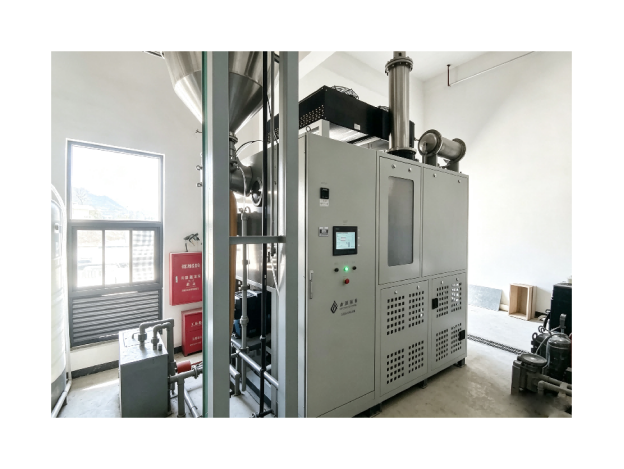
VIFLUTER publishes this guide and maintains a public page for zero liquid discharge solutions. That page provides company and solution context. It does not prove market leadership, superiority over another supplier, or suitability for an uncharacterized wastewater.
Best Zero Liquid Discharge Plant Design and Installation Companies
A universal best-company ranking cannot represent every feed, site, jurisdiction, utility system, and residual route. One supplier may fit a difficult thermal duty. Another may have the right membrane, materials, construction, or local service boundary. The buyer should define what success means and then evaluate every proposal on that same basis.
The comparison should remain criteria-first. Establish the technical requirements, evidence standard, decision factors, weighting, disqualifying conditions, and conflict disclosures before proposals arrive. This reduces the risk that a familiar brand, a low headline price, or an unsupported performance statement changes the evaluation method after the fact.
Define the Project Boundary
Start with a source-by-source wastewater inventory and a complete water and solids balance. Define minimum, normal, and peak flow; representative chemistry; variability; current treatment; recovered-water use; concentration or solids endpoint; utilities; operating schedule; storage; redundancy; and residual destinations. Identify assumptions that still require sampling or testing.
The supplier boundary should state which party owns pretreatment, membrane concentration, evaporation, crystallization, dewatering, polishing, controls, buildings, foundations, piping, electrical work, utilities, storage, permits, residual characterization, and off-specification routing. A proposal can appear complete because a difficult responsibility has been excluded or left unnamed.
Set Evaluation Factors Before Reviewing Proposals
Write the evaluation factors into the request for proposal and use them consistently. U.S. federal acquisition rules provide a scoped example of this principle by requiring evaluation factors to be stated and proposals to be assessed against the disclosed factors. Private and non-U.S. buyers must follow their own procurement rules, but the transparency principle remains useful.
Verify Supplier Identity and Delivery Scope
Confirm the legal entity that will sign the contract and distinguish it from brands, agents, licensors, subcontractors, and installation partners. Request current registration details, authorized contacts, manufacturing or assembly responsibility, engineering locations, proposed subcontractors, and the party accountable for system performance and site integration.
Check whether the supplier is offering equipment only, a process package, detailed engineering, installation supervision, construction, commissioning, training, or ongoing service. Ask who coordinates interfaces and who approves design changes. A broad term such as turnkey should be replaced by a written responsibility matrix.
Evaluate Process Design Capability
ZLD is a system-level wastewater-management strategy. Peer-reviewed reviews discuss thermal and membrane-based process families and emphasize cost, energy, and residual constraints. VIFLUTER's public industrial wastewater ZLD process page shows one staged process context, not a mandatory train for every supplier or project.
Ask each bidder to explain why every stage is included, what inlet it expects, which contaminants or material flows it changes, what outlet it creates, and how the next stage accepts that outlet. Review pretreatment chemistry, membrane reject, volatile compounds, scaling, foam, corrosion, boiling-point elevation, crystal behavior, cleaning waste, recycles, and purges as applicable.
Require Treatability and Performance Evidence
Separate evidence types. A brochure supports public product positioning. A current data sheet supports a defined model and condition. A bench or pilot report supports the tested feed, concentration range, duration, measurements, and procedure. A customer reference supports only the facts the customer has authorized and the buyer has verified.
Define acceptance criteria before testing. State the feed case, sampling method, mass-balance period, instrument accuracy, allowable operating condition, water-quality test, residual condition, and response to off-specification results. A removal, recovery, capacity, energy, or availability value should not move into the contract unless its basis and boundary are explicit.
Compare Installation and Integration Responsibility
Installation risk often sits at interfaces. Review foundations, structural loads, access, lifting, piping, valves, drains, vents, exhaust, heat and cooling connections, electrical supply, controls, network access, hazardous areas, noise, winterization, insulation, and maintenance clearances. Assign design, supply, installation, inspection, and acceptance responsibility for each interface.
Define Water and Residual Responsibilities
Recovered water requires a named destination and quality basis. The U.S. Environmental Protection Agency notes that different recycled-water sources and end uses may require different treatment and monitoring. Ask who defines the receiving requirement, who samples and approves the water, and where off-specification water goes. Do not accept a general reusable-water statement without the actual use.
The residual plan should cover pretreatment sludge, membrane concentrate, evaporator concentrate, crystal slurry, dewatered solids, spent media, filter backwash, purge, and cleaning waste as applicable. Record composition, storage, transfer, further treatment, characterization, and destination. A supplier should not describe ZLD as zero waste.
Review Energy Operations and Service
Compare energy on the same feed and system boundary. U.S. Department of Energy process-heating guidance supports a systems approach that considers heat transfer, controls, equipment condition, and energy recovery. Request the thermal and electrical assumptions, utility conditions, included auxiliaries, operating hours, cleaning allowance, and measurement method. The guidance does not support a supplier-specific energy value.
Review operator workload, routine inspection, cleaning, consumables, spare parts, remote access, training, troubleshooting, service location, escalation, documentation, software support, and obsolescence. Ask for a maintenance plan tied to the proposed equipment and feed. Avoid assuming that a service office or warranty statement covers every site need.
Compare Commercial Offers on the Same Basis
Request dated commercial proposals with the same technical scope and bid form. Compare currency, taxes, delivery basis, validity, payment milestones, equipment, engineering, civil and installation work, utilities, commissioning, testing, training, parts, consumables, service, exclusions, and change-order assumptions. This guide publishes no price range, lowest-cost claim, ROI, or payback conclusion.
If a technology license or proprietary process is material, request the official agreement or rights statement. Clarify the licensor, territory, term, permitted use, transfer restrictions, updates, support, fees, expiration, termination, and obligations only within the buyer's confidential review. Do not infer licensing rights from a logo, distributor statement, or marketing page.
Validate Certificates Cases and Guarantees
A certification claim needs the current certificate, issuing body, legal entity, site, product or management-system scope, standard edition, validity, and public registry where available. A case claim needs client permission, project boundary, feed, date, conditions, measured result, and reference contact. If those elements are unavailable, keep the item unverified and out of public comparison.
Warranty and guarantee language should appear in the signed commercial documents with definitions, exclusions, remedies, test conditions, owner obligations, and duration. Marketing language is not a substitute. This article does not publish or imply any supplier warranty or performance guarantee.
Use a Supplier Evaluation Matrix
Evaluation area | Evidence to request | Decision question |
Project fit | Feed envelope, water and solids balance, process rationale and operating limits | Does the proposal solve the defined duty across normal and limiting cases |
Testing and claims | Representative test report, measurement method, acceptance basis and claim boundaries | Is every material claim traceable to comparable evidence |
Delivery responsibility | Legal entity, organization chart, responsibility matrix, interface list and project schedule | Is one accountable party assigned to every design and site handoff |
Operations and service | Maintenance plan, staffing assumptions, parts, training, support and escalation scope | Can the owner operate and maintain the proposed system within site constraints |
Commercial scope | Common bid form, dated price, exclusions, payment terms, license documents and contract language | Are offers comparable without hidden owner costs or unsupported rights |
Record Red Flags and Conflicts
·A claimed reference cannot be contacted or does not match the proposed feed and system boundary.
·Performance values omit test conditions measurement methods auxiliaries or residual outlets.
·The proposal relies on a partner or license but does not identify responsibility or current rights.
·Price excludes material interfaces while still appearing as a complete plant comparison.
·The evaluation method changes after a preferred supplier or commercial offer becomes visible.
Record any relationship, sponsorship, agency, distribution arrangement, prior engagement, or other conflict that could affect the evaluation. This guide is published by VIFLUTER and does not compare named suppliers. The buyer should retain its own independent technical, commercial, and legal review.
Build the Shortlist from Verified Project Fit
The best zero liquid discharge plant design and installation companies are the candidates that meet the buyer's predefined scope and evidence requirements. A neutral evaluation does not require a public ranking. To prepare a project-specific discussion, share the feed and procurement boundary with VIFLUTER together with flow variability, chemistry, recovered-water use, utilities, residual routes, site interfaces, testing needs, and required commercial scope.
Sources and Further Reading
·Tong and Elimelech, The Global Rise of Zero Liquid Discharge for Wastewater Management, Environmental Science and Technology, 2016.
·Yaqub and Lee, Zero liquid discharge technology for resource recovery from wastewater, Science of the Total Environment, 2019.
·U.S. Environmental Protection Agency, Basic Information about Water Reuse, updated June 5, 2026.
·U.S. Department of Energy, Improving Process Heating System Performance, Second Edition, 2008.
·Electronic Code of Federal Regulations, Evaluation Factors and Significant Subfactors, 48 CFR 15.304, accessed September 8, 2026.
·Electronic Code of Federal Regulations, Proposal Evaluation, 48 CFR 15.305, accessed September 8, 2026.