
 | marketing@wsdks.com |  | +8617712621386 |  | No. 8 Jinwei Road, Changshu City, Jiangsu Province, P.R.China |


How AI Can Support Zero Liquid Discharge in Paper Manufacturing
AI can support decisions but cannot perform the separation. The question of how AI helps paper manufacturers achieve zero liquid discharge is best answered through monitoring, forecasting, anomaly detection, and operator decision support. Physical treatment units still recover water and manage residuals. Operators remain responsible for control, safety, quality, and environmental decisions.
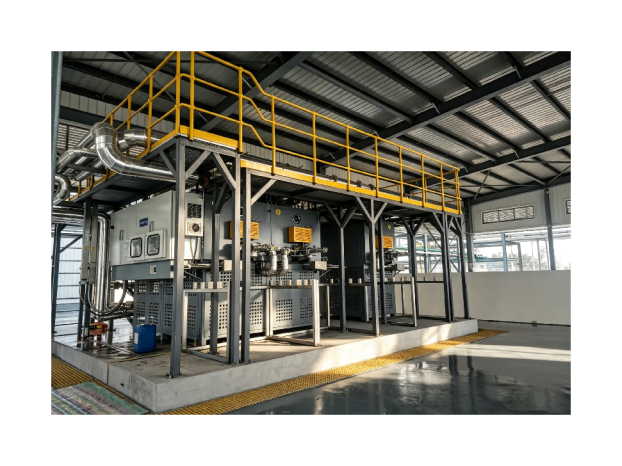
VIFLUTER's zero liquid discharge solutions page provides treatment context. VIFLUTER has not been represented here as an AI software supplier, autonomous control vendor, or paper mill case provider.
How AI Helps Paper Manufacturers Achieve Zero Liquid Discharge
AI is useful only when it supports a defined operating task. A model may estimate an upcoming flow or load, identify a pattern that differs from normal operation, rank inspection priorities, or recommend a bounded operating review. It should not be described as achieving ZLD, certifying water quality, or deciding compliance.
The ZLD boundary includes the physical source streams, pretreatment, concentration, water recovery, thermal finishing, solids handling, storage, recycles, purges, and cleaning waste. An AI output can inform a person or an approved control function within that system. It cannot replace the material balance or the equipment that changes the water and constituent flows.
Map Paper Wastewater Before Building Models
Paper and paperboard facilities differ by raw material, pulping or recovered fiber process, bleaching where applicable, product, additives, water circuits, energy system, and wastewater treatment. The U.S. EPA pulp paper and paperboard page organizes the sector into subcategories and notes that regulated pollutants vary by subcategory. A model trained on one mill or campaign should not be assumed to represent another.
Build a stream map with flow, timing, temperature, pH, conductivity, solids, organic indicators, color where relevant, additives, and other process specific variables. Link each signal to the process event that creates it. Include grade changes, cleaning, shutdown, startup, upset, and seasonal conditions that may differ from normal production.
Establish the Data Foundation
Useful inputs can come from calibrated field instruments, laboratory results, maintenance records, production context, alarm history, operator logs, and the plant historian or supervisory system. Each tag needs a definition, unit, location, sampling interval, quality rule, and known maintenance behavior. Time alignment matters when laboratory data arrives after the operating event.
Missing data, sensor drift, manual overrides, instrument range limits, and process changes should remain visible. A model can produce a number even when the input is wrong. Data validation should therefore distinguish a real process change from a sensor or collection problem before an alert reaches the operator.
Forecast Flow and Treatment Load
A forecast may help the water team prepare equalization, storage, treatment capacity, or a cleaning window for an expected production campaign. The useful prediction horizon and variable depend on the operating decision. A forecast of average flow may not help if peak salt load or a short upset controls the equipment.
Evaluate forecasts against a simple baseline and use data that was available at the prediction time. Separate training, validation, and later operating periods. Report error by relevant operating mode and keep a fallback when data is missing. Do not publish a predictive accuracy claim or savings estimate without a verified test design and approved evidence.
Detect Anomalies and Fouling Signals
Anomaly detection can compare current combinations of pressure, temperature, flow, level, conductivity, power, valve state, and quality data with an approved baseline. It may flag an unusual pattern earlier than a single alarm threshold. The alert still requires process context, instrument checks, and a human decision.
Fouling and scaling should be diagnosed from trends, feed chemistry, inspection, deposit evidence, and cleaning history. A model can prioritize review but should not prescribe a universal chemical or cleaning interval. False alarms, missed events, and changing operating modes must be tracked so the alert logic can be revised responsibly.
Support Maintenance and Operating Reviews
AI supported task | Required inputs | Human decision and limit |
Flow or load forecast | Production schedule, historical flow and chemistry, operating mode and recent data quality | Operator confirms storage and capacity actions; model does not guarantee the next load |
Anomaly alert | Calibrated process trends, equipment state, alarm history and baseline conditions | Operator checks instruments and process context before intervention |
Fouling or maintenance priority | Normalized performance, feed changes, inspection and work order history | Engineer confirms mechanism, safety, cleaning method and outage decision |
Operating recommendation | Approved controllable variables, constraints, current state and treatment objectives | Recommendation stays inside an authorized envelope and can be rejected or overridden |
Keep Operators in the Control Loop
Define who receives each model output, what evidence appears with it, which actions are allowed, and when the operator must ignore or escalate the recommendation. High consequence changes should use approved control logic, interlocks, and management of change. A model should not bypass safety systems or environmental procedures.
The NIST AI Risk Management Framework is a voluntary framework for managing risks and trustworthiness considerations in AI systems. A paper mill can use that type of structure to document purpose, users, data, limits, testing, monitoring, incident handling, and retirement. The framework does not validate a specific industrial model or make it safe by declaration.
Protect Operational Technology
Connecting analytics to plant data or control systems changes the cybersecurity boundary. NIST Special Publication 800 82 Revision 3 provides guidance for securing operational technology while addressing performance, reliability, and safety requirements. The implementation should follow the mill's approved architecture and security program.
Use least necessary access, controlled interfaces, authenticated changes, logging, network segmentation where appropriate, backup and recovery, supplier access controls, and tested fallbacks according to the site design. A read only pilot may reduce initial control risk. Cybersecurity review should happen before a model receives broader data or any write capability.
Manage Model Drift and Process Change
Model drift can occur when raw materials, product grades, chemicals, equipment, instruments, operating strategies, or wastewater routing change. Track model inputs and output behavior by operating mode. Define review triggers for persistent error, missing tags, new production conditions, repeated operator rejection, or changes to the physical treatment train.
Version each model and retain the training period, variables, transformations, test results, owner, approval, and deployment date. Revalidate after material changes. If the model is no longer reliable, fall back to approved operating procedures while it is reviewed. A newer model should not replace a stable process control simply because it is more complex.
Connect Analytics to the Physical Treatment Train
A public VIFLUTER page discusses MVR and multi effect mother liquor treatment and mentions papermaking among several industry contexts. That page supports the internal link and treatment context only. It does not prove a paper project, an AI feature, predictive performance, or autonomous control.
Useful analytics should point to a physical decision such as sampling a stream, checking an instrument, preparing storage, inspecting heat transfer, reviewing a cleaning record, or adjusting a production plan through an approved workflow. If the output cannot change a defined decision safely, collecting more model metrics will not make it operationally useful.
Run a Bounded Pilot
·Choose one operating decision with a named owner and measurable baseline.
·Confirm data definitions, quality, timing, cybersecurity access, and missing data behavior.
·Test the model offline or read only before any approved control integration.
·Measure false alarms, missed events, operator response, process context, and maintenance burden.
·Define acceptance, monitoring, rollback, retraining, and retirement rules before deployment.
Use AI for Evidence Based Decision Support
How AI helps paper manufacturers achieve zero liquid discharge is through better visibility and bounded decisions around a physical treatment system. To review whether available operating data can support a safe pilot, share the data inventory and treatment boundary with VIFLUTER together with sensors, history, operator workflow, wastewater variability, cybersecurity limits, and the decision the model would support.
Sources and Further Reading
·U.S. Environmental Protection Agency, Pulp Paper and Paperboard Effluent Guidelines, updated March 24, 2026.
·National Institute of Standards and Technology, AI Risk Management Framework, accessed September 7, 2026.
·National Institute of Standards and Technology, Guide to Operational Technology Security, Special Publication 800 82 Revision 3, 2023.
·Tong and Elimelech, The Global Rise of Zero Liquid Discharge for Wastewater Management, Environmental Science and Technology, 2016.